Thursday, January 13, 2022

Hilary

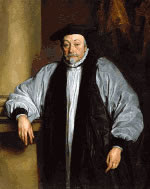
Hilary of Poitiers, Bishop, 367

The Collect:

Keep us steadfast, Lord God, in that true faith that we professed at our baptism; that, like your servant Hilary of Poitiers, we may rejoice in having you for our Father, and may abide in your Son, in the fellowship of the Holy Spirit; for you live and reign for ever and ever as one God in Trinity of Persons. Amen.

Hilary of Poitiers (315-367) lived during the great controversy between Athanasius, who taught that the Son is fully God, equally with the Father, and Arius, who denied this. 

Hilary is sometimes called "the Athanasius of the West." He was bishop of Poitiers, and when he refused to sign a condemnation of Athanasius, the Arian emperor Constantius (one of the sons of Constantine) banished him to Phrygia in 357. His exile lasted three years, during which time he wrote several essays, including On the Trinity. Finally the Emperor was forced to send him back to Gaul because he was causing such difficulties for the Arians in the East. In 364, he journeyed to Milan, where he engaged in public debate with the Arian bishop Auxentius, and persuaded him of the error of his ways. *

* The Lectionary, James Kiefer, http://satucket.com/lectionary/Hilary.htm

Wednesday, January 12, 2022

Tonight


January 12 - Feast of St. Aelred of Rievaulx, Abbot and Theologian

Evening Prayer and Study of Aelred - Tonight via Zoom

Join us tonight - Wednesday night, January 12, for Evening Prayer and our Study of Aelred Class.

Zoom Evening Prayer & Aelred Class
Wednesday, 5:30 p.m.

Join Zoom Meeting
https://us02web.zoom.us/j/86781577595?pwd=VjNnZTZnUFFadkJPc3VOVTh3K21Idz09

Meeting ID: 867 8157 7595
Passcode: 530
Dial by your location +1 312 626 6799 or +1 346 248 779

More information about Aelred follows...

Aelred of Rievaulx,
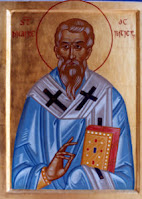
Abbot and Theologian, 1167

The Collect:

Grant to your people, Almighty God, a spirit of mutual affection, that following the example of your servant Aelred, we might know the love of Christ in loving one another, and might rejoice in the gift of your eternal goodness; through the same Jesus Christ our Lord, who lives and reigns with you and the Holy Spirit, one God, now and for ever. Amen.

Aelred was born in 1109 at Durham, and was sent to the Scottish court for an education that would ensure his future as a noble and courtier. He succeeded, to the extent of being made Master of the Household of the King of Scotland. Nevertheless, he found success at the court of an earthly king unsatisfying, and at the age of 24 he entered the Cistercian monastery at Rievaulx in Yorkshire. Bernard of Clairvaux encouraged him to write his first work, The Mirror of Charity, which deals with seeking to follow the example of Christ in all things. In 1147 he became abbot of Rievaulx, a post which he held until his death of kidney disease twenty years later at the age of 57.

His most famous work is called Spiritual Friendship (both it and the Mirror have been published in English by the Cistercian Press).

When Jesus was told that his family was waiting to see him, he replied, "All who do the will of my Father are my family." From this, some Christians have drawn the conclusion that the only kind of love permissible to a Christian is Charity -- that is: (a) the universal benevolence that wills the good of all persons, and (b) the bond that unites the Christian with Christ and through Christ with all other Christians. Note that Universal Benevolence is extended equally to all persons (we are to love Jones because God made him), and that the bond of Christian Unity unites us equally with all our fellow Christians who are in a state of grace (we are to love Jones because Christ dwells in him). Neither leaves any room for particular friendships, for liking Jones more than Smith because Jones shares our interest in hockey, or because Jones and we like the same sort of jokes, or come from the same part of the country and have similar childhood memories, or because Jones is an easy-going type and it is easy to relax and feel comfortable around him, or because Jones and we have a special bond of friendship, loyalty, and trust. Particular friendships are out!

Some who do not think that every Christian must renounce particular friendships believe that every monastic must do so. In many religious houses, where the monks or nuns walk two by two into chapel or the dining hall or while pacing about during the daily hour of recreation, the superior will make a point of constantly shifting partners, lest anyone form a liking for one partner more than another. (This does not apply just to friends. It is sometimes held that no monk ought to allow himself any preferences in food or drink.) Against this view, Aelred wrote that it is compatible with the highest degree of Christian perfection to take special pleasure in the company of particular friends. He point out that we are told that Jesus loved John, and Mary, and Martha, and Lazarus, and that this probably means that he found their company congenial. *

* The Lectionary, James Kiefer, http://www.satucket.com/lectionary/Aelred.htm

Tuesday, January 11, 2022

Monroe Convocation Meeting


Epiphany


Epiphany

Epiphany is a Greek word meaning “manifestation, showing forth, revelation.” This feast proclaims our faith that in Jesus, God is revealed to all people — not just to an inner circle or a chosen few, but to all people, in all places, and throughout all time. Christians believe that in the person of Jesus we see who God is, and in the words and actions of Jesus we see God at work in the world. Epiphany marks a series of occasions at which Jesus was revealed to be God’s Son.

The feast of Epiphany and the weeks that follow are a time when we reflect on several “manifestations” of Jesus, as he was recognized as the Messiah (or Christ) by many different people. We hear about Jesus’ baptism in the river Jordan by John the Baptist and the visit of the magi, or wise men, who followed the star to Bethlehem at Jesus’ birth. We share the amazement of the guests at the wedding party at Cana as Jesus performs his first miracle by turning water into fine wine. And at the end of the season we see Jesus’ glory shown to three of his disciples on the mountain as he is transfigured before them in a blaze of light.

Open: Arise, shine, for your light has come. And the glory of the Lord has dawned upon you.

Scripture: God said, “Let there be light,” and there was light. And God saw that the light was good. Genesis 1:3

Meditation: How will I invite God’s love to shine through me today?

Prayer: Brightest and best of the stars of the morning, Dawn on our darkness and lend us thine aid; Star of the east, the horizon adorning, Guide where the infant Redeemer is laid.

Close: Arise, shine, for your light has come. And the glory of the Lord has dawned upon you. *

* Daily Prayer for All Seasons, © 2014 The Domestic and Foreign Missionary Society of The Protestant Episcopal Church in the United States of America

Monday, January 10, 2022

William Laud

William Laud, Archbishop of Canterbury, 1645

The Collect:

Keep us, O Lord, constant in faith and zealous in witness, that, like your servant William Laud, we may live in your fear, die in your favor, and rest in your peace; for the sake of Jesus Christ your Son our Lord, who lives and reigns with you and the Holy Spirit, one God, for ever and ever. Amen.

William Laud, born in 1573, was Archbishop of Canterbury from 1633 to 1645 in the days of King Charles I. It was a turbulent time throughout, one of violent divisions in the Church of England, eventually culminating in the English Civil War. 

An example is the surplice controversy. We have all encountered Christians who are opposed to celebrating Christmas on the grounds that (a) the Bible nowhere commands us to celebrate Christmas, and does not mention the 25th of December; and (b) the pagans had a festival in December at which they built fires and feasted and exchanged gifts, from which it follows that those who celebrate Christmas are participating in pagan rites. Similarly, in the late 1500's and early 1600's, there were Christians in England who objected to the garment called the surplice. When participating in the services of Morning and Evening Prayer in Church, clergy, including choir members, normally wore a cassock (a black, floor-length, fairly tight-fitting garment) covered by a surplice (a white, knee-length, fairly loose garment with loose sleeves). The Puritans objected to the surplice (a) as not mentioned in the Bible, and (b) as something that the Roman Catholics had worn before the Reformation, which made it one of the props of idolatrous worship, and marked anyone who wore it as an idolater. Archbishop Laud regarded it as a seemly, dignified, garment, an appropriate response to the Apostle Paul's injunction, "Let all things be done decently and in order." The Puritans stood by their objections, and violently interrupted services at which the surplice was worn. On one occasion, a group of Puritans broke into an Oxford chapel the night before a service and stole the surplices, which they thrust into a  dung-pit of a privy. Again, a woman marched into Lichfield Cathedral, accompanied by the town clerk and his wife, and ruined the altar hangings with a bucket of pitch. 

Under English Law, it was part of Laud's office as Archbishop to maintain order and to punish offences against the peace of the Church. He made it his practice to proceed not only against poor and obscure offenders, but also, perhaps especially, against rich and powerful ones. It is well that men should be equal before the law, but his integrity on this point ultimately cost Laud his life. 

Laud was also the prosecutor of record in the trials of those who published seditious or violent and abusive attacks on the doctrine and discipline of the Church, and the Puritans produced an abundance of scurrilous attacks on those who disagreed with them, which were duly punished, with Laud taking the responsibility. In 1630 (before Laud became Archbishop), when Alexander Leighton published Zion's Pleas Against Prelacy, a violent attack on the Bishops as tools of Antichrist, he was sentenced to be publicly whipped and branded, and to have his ears cut off. He was sixty years old and a Doctor of Divinity, and the sentence aroused great public indignation. (It is not certain that it was actually carried out.) 

Laud made enemies chiefly in three ways. (1) He punished those who attacked the Church, both those who vandalized and those who merely scolded. (2) He upheld various customs in public worship (such as the wearing of the surplice) that were harmless in themselves, but which aroused the suspicion and fury of those who feared a return to power of Roman Catholicism. (3) He sought the financial independence of the clergy, so that a preacher was not dependent on what support the local squire was pleased to give him. His proposed means to this end was to restore to the Church some of the Church lands that had been seized by Henry VIII and given or sold to various nobles and gentlemen. The proposal never reached the stage of discussion about details, so it was not clear how compensation would be handled, but the mere whisper of such a proposal was enough to make every landholder in the country feel personally threatened. 

In 1637 an attempt was made to introduce The Book of Common Prayer into general use in Scotland, and it immediately caused rioting. In February of 1638, Scottish leaders signed the National Covenant, by which they pledged themselves to uphold the Puritan position by force, and by the end of the year they had voted to depose and excommunicate every bishop in Scotland. The unrest spread to England, and in 1640 Laud was arrested on a charge of high treason. He was kept in the Tower for four years, and tried in 1644, at the age of seventy-one. He was found guilty, not because there was any evidence of his guilt, but because the House of Commons was determined that he should die. On the scaffold he prayed: "The Lord receive my soul, and have mercy on me, and bless this kingdom with peace and charity, that there may not be this effusion of Christian blood amongst them." *

* The Lectionary, James Kiefer, http://satucket.com/lectionary/William_Laud.htm 
Saturday, January 8, 2022

Worship This Sunday!


Sunday, January 9, 2022

Join us for “at church” or “virtually” for worship this Sunday, January 9, The First Sunday after the Epiphany: The Baptism of Our Lord Jesus Christ, at St. Alban’s, St. Thomas’, St. Patrick’s, and Iglesia Episcopal La Esperanza de Familias Unidas. Remember - Masks are optional, and communion will be offered in both kinds- wine by intinction. We strongly urge everyone to get vaccinated. Please maintain social distance in non-family groups.

Holy Eucharist, Rite Two
St. Alban’s - 8:30 a.m. and 10:30 a.m.*
St. Thomas' - 10:00 a.m.*
St. Patrick’s – 11:00 a.m.*
* These liturgies will be Live-Streamed on Facebook for those who choose to remain at home. Download a pdf of the leaflet to print or to use on your phone or tablet with this link - https://drive.google.com/file/d/15onJHU2oBG9P_an1KOJMLYJURa-ZPGLw/view?usp=sharing

La Santa Eucaristía: Rito Dos en la iglesia (primer y tercer domingo del mes y transmitido en vivo en Facebook) o Oración de la tarde diaria a través de Zoom (los otros domingos del mes)

Iglesia Episcopal La Esperanza de Familias Unidas – Domingo - 5:00 p.m.

Oración Vespertina Diaria a través de Zoom - Únete aqui
https://us02web.zoom.us/j/89906444437?pwd=bmdXYW9kNjVicVJHU3Fkb3BrMitKZz09

ID de reunión: 899 0644 4437
Contraseña: 500
o llame al +1 312 626 6799 or  +1 346 248 7799

Zoom Compline - All Welcome 
Sunday -  8:00 p.m.

Join Zoom Meeting
https://us02web.zoom.us/j/83861688528?pwd=WFdBcndxV3hzbUpETDNTSFFzc3Z0QT09 Meeting ID: 838 6168 8528
Passcode: 800
or dial in at  +1 312 626 6799 or +1 346 248 7799

We hope to “see” you all on Sunday as you are most comfortable!

Rita+, Rob+ and Whit+

Art from Clip Art, Steve Erspamer, Liturgy Training Publications – ltp.org

Harriet Bedell

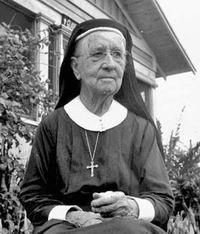
Harriet Bedell, Deaconness and Missionary, 1969

The Collect:

Holy God, fill us with compassion and respect for all people, and empower us for the work of ministry whether near or far away; that like thy servant Harriet Bedell, we may how forth your praise, not only with our lips, but in our lives. Through Jesus Christ our Lord, who lives and reigns with you and the Holy Spirit, one God, for ever and ever. Amen.

Harriet Bedell, missionary and friend to the Seminole Indians of Florida, was born in Buffalo, New York on March 19, 1875. She was trained as a schoolteacher but was inspired several years later by an Episcopalian missionary who spoke at her church describing the many needs of missionary work. In 1906 she applied to, and was accepted by, the New York Training School for Deaconesses, where her one-year course of study included instruction in religious matters, missions, teaching, hygiene, and hospital nursing. Following her training she was sent as a missionary-teacher to the Cheyenne Indians at Whirlwind Mission in Oklahoma.

Bedell's duties at the Whirlwind Mission were many. She cared for the sick and the poor, organized social services for the tribe, performed the duties of the rector in his absence, and provided education for the women and children. She provided religious instruction, hoping to win the confidence of the Indians and convert them to Christianity.

Because of her experience in both teaching and working with Indians, in 1916 an Episcopal bishop requested that she consider an assignment in a remote area of Alaska. Saddened by the prospect of leaving Oklahoma, she nevertheless accepted her new assignment in Stevens Village, Alaska. While there, in 1922 she was finally made a deaconess in the church, instilling in her a new and profound dedication to her vocation. The mission at Stevens Village was moved to Tanana so that a boarding school funded by church members' contributions could be established for the children who could not travel in the bad winter weather. However, by 1931, funds were so scarce that Deaconess Bedell traveled to New York to plea for more contributions. Because of the Great Depression, there was little available money, and although the church paid off the school's existing debt, there was little reason for Bedell to return to Alaska.

Through speaking engagements following her service in Alaska, Bedell was invited to visit a Seminole Indian reservation in southern Florida. Appalled by their living conditions, she began her campaign to improve the quality of life among the Mikasuki-Seminole Indians by living and working with them, not merely teaching them. She sought to revive the doll making and basket weaving skills which had become nearly extinct. She encouraged the incorporation of the intricate patchwork designs made by Indian women into articles of clothing for both women and men. Sales from the arts and crafts store at Blades Cross Mission helped to provide improved income for the Mikasuki-Seminoles.

Bedell emphasized health and education rather than religious conversion in her work with the Seminoles; their spiritual and physical comfort was more important to her than religious conversion, and her work and friendship with the Seminoles of Florida reflected those values.*

* Source: The Florida Memory Project, via The Lectionary,  http://www.satucket.com/lectionary/Bedell.htm