
Saturday, July 24, 2021
Friday, July 23, 2021
John Cassian
John Cassian, Monastic and Theologian, 435

Holy God, whose beloved Son Jesus Christ blessed the pure in heart: Grant that we, together with your servant John Cassian and in union with his prayers, may ever seek the purity with which to behold you as you are; one God in Trinity of persons now and for ever. Amen.
Saint John Cassian (ca. 360 – 435) (Latin: Jo(h)annes Eremita Cassianus, Joannus Cassianus, or Joannes Massiliensis), John the Ascetic, or John Cassian the Roman, is a Christian theologian celebrated in both the Western and Eastern Churches for his mystical writings. He is known both as one of the "Scythian monks" and as one of the "Desert Fathers." John Cassian was born around 360 probably in the region of Scythia Minor (now Dobruja in modern-day Romania), although some scholars assume a Gallic origin. He was involved in a disputation concerning the Patriarch of Constantinople (St. John Chrysostom), and, when the Patriarch was forced into exile from Constantinople in 404, the Latin-speaking John Cassian was sent to Rome to plead his cause before Pope Innocent I. While he was in Rome John Cassian accepted the invitation to found an Egyptian style monastery in southern Gaul, near Marseille. His foundation, the Abbey of St Victor, a complex of monasteries for both men and women, was one of the first such institutes in the west, and served as a model for later monastic development. Cassian's abbey and writings influenced St. Benedict, who incorporated many of the same principles into his monastic rule. Since Benedict's rule is still used by Benedictine, Cistercian, and Trappist monks, the thought of John Cassian still guides the spiritual lives of thousands of men and women in the Western Church. John Cassian wrote two major spiritual works, the Institutions and Conferences. In these, he codified and transmitted the wisdom of the Desert Fathers of Egypt. The Institutes (Latin: "De institutis coenobiorum") deal with the external organization of monastic communities, while the Conferences (Latin: "Collationes") deal with "the training of the inner man and the perfection of the heart." The spiritual traditions of John Cassian had an immeasurable effect on Western Europe. Many different western spiritualities, from that of Saint Benedict to that of Saint Ignatius of Loyola, owe their basic ideas to John Cassian.*
*The Lectionary, via Wikipedia - http://www.satucket.com/lectionary/john_cassian.htm

Thursday, July 22, 2021
Saint Mary Magdalene
Saint Mary Magdalene

According to John 20:11-18...
But Mary stood weeping outside the tomb. As she wept, she bent over to look into the tomb; and she saw two angels in white, sitting where the body of Jesus had been lying, one at the head and the other at the feet. They said to her, ‘Woman, why are you weeping?’ She said to them, ‘They have taken away my Lord, and I do not know where they have laid him.’ When she had said this, she turned round and saw Jesus standing there, but she did not know that it was Jesus. Jesus said to her, ‘Woman, why are you weeping? For whom are you looking?’ Supposing him to be the gardener, she said to him, ‘Sir, if you have carried him away, tell me where you have laid him, and I will take him away.’ Jesus said to her, ‘Mary!’ She turned and said to him in Hebrew, ‘Rabbouni!’ (which means Teacher). Jesus said to her, ‘Do not hold on to me, because I have not yet ascended to the Father. But go to my brothers and say to them, “I am ascending to my Father and your Father, to my God and your God.” ’ Mary Magdalene went and announced to the disciples, ‘I have seen the Lord’; and she told them that he had said these things to her.
The Collect:
Almighty God, whose blessed Son restored Mary Magdalene to health of body and of mind, and called her to be a witness of his resurrection: Mercifully grant that by your grace we may be healed from all our infirmities and know you in the power of his unending life; who with you and the Holy Spirit lives and reigns, one God, now and for ever. Amen.
Wednesday, July 21, 2021
Zoom Evening Prayer & Bible Project
Join us tonight for Evening Prayer and our Bible Project Class to learn something new about the Bible.
Zoom Evening Prayer & Bible Project
Wednesday, 5:30 p.m.
Join Zoom Meeting
https://us02web.zoom.us/j/86781577595?pwd=VjNnZTZnUFFadkJPc3VOVTh3K21Idz09
Meeting ID: 867 8157 7595
Passcode: 530
Dial by your location +1 312 626 6799 or +1 346 248 7799
Maria Skobtsova
Maria Skobtsova, Monastic and Martyr, 1945

The Collect:
O Creator and Giver of Life, who crowned your martyr Maria Skobtsova with glory and gave her as an example of service to the suffering and poor even unto death: Teach us to love Christ in our neighbors, and thereby battle injustice and evil with the light of the Resurrection; through Jesus Christ our Lord, who lives and reigns with you and the Holy Spirit, one God in glory everlasting. Amen.
Maria Skobtsova (20 December 1891 in Riga – 31 March 1945 in Ravensbrück concentration camp, Germany), was a Russian noblewoman, poet, nun, and member of the French Resistance during World War II.
Maria was born to an aristocratic family in 1891 in Riga, Latvia, then part of the Russian Empire. She was given the name Elizaveta Pilenko. Her father died when she was a teenager, and she embraced atheism. In 1906 her mother moved the family to St. Petersburg, where she became involved in radical intellectual circles. In 1910 she married a Bolshevik by the name of Dmitriy Kuz'min-Karavaev. During this period of her life she was actively involved in literary circles and wrote much poetry. By 1913 her marriage to Dimitriy had ended.
Through a look at the humanity of Christ — "He also died. He sweated blood. They struck his face" — she began to be drawn back into Christianity. She moved—now with her daughter, Gaiana—to the south of Russia where her religious devotion increased.
In 1918, after the Bolshevik Revolution, she was elected deputy mayor of Anapa in Southern Russia. When the anti-communist White Army took control of Anapa, the mayor fled and she became mayor of the town. The White Army put her on trial for being a Bolshevik. However, the judge was a former teacher of hers, Daniel Skobtsov, and she was acquitted. Soon the two fell in love and were married.
Soon, the political tide was turning again. In order to avoid danger, Elizaveta, Daniel, Gaiana, and Elizaveta's mother Sophia fled the country. Finally they arrived in Paris in 1923. Soon Elizaveta was dedicating herself to theological studies and social work.
Soon, Daniel and Elizaveta's marriage was falling apart. Elizaveta moved into central Paris to work more directly with those who were most in need.
Her bishop encouraged her to take vows as a nun, something she did only with the assurance that she would not have to live in a monastery, secluded from the world. In 1932, with Daniel Skobtov's permission, an ecclesiastical divorce was granted and she took monastic vows. In religion she took the name Maria. Eventually, Fr. Dmitri Klepinin would be sent to be the chaplain of the house.
Mother Maria made a rented house in Paris her "convent". It was a place with an open door for refugees, the needy and the lonely. It also soon became a center for intellectual and theological discussion. In Mother Maria these two elements—service to the poor and theology—went hand-in-hand.
After the Fall of France in 1940, Jews began approaching the house asking for baptismal certificates, and Father Dimitri would provide them. Many Jews came to stay with them. They provided shelter and helped many to flee the country. Eventually the house was closed down. Mother Maria, Fr. Dimitri, her son Yuri and her mother Sophia were all arrested by the Gestapo. Fr. Dimitri and Yuri both died at the Dora concentration camp.
Mother Maria was sent to the Ravensbrück concentration camp. On Holy Saturday, 1945, she was sent to the Gas Chamber.*
*Source, The Lectionary, via Wikipedia - http://satucket.com/lectionary/maria_skobstova.html
Tuesday, July 20, 2021
Stanton, Bloomer, Truth, and Tubman
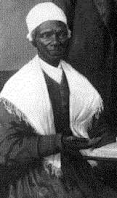
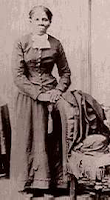
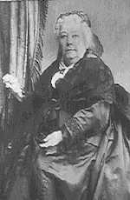
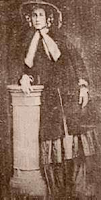
Elizabeth Cady Stanton, 1902, Amelia Bloomer, 1894, Sojourner Truth, 1883, and Harriet Ross Tubman, 1913, Social Reformers
We remember today, four American Pioneers of Black Rights and Women’s Rights.
The Episcopal Church has added to its Calendar four American women who were pioneers in the struggle for black emancipation and for women's votes. The date chosen for commemorating them is the anniversary of the Women's Rights Convention held in Seneca Falls, New York, 19-20 July 1848. More complete information on each of these amazing women can be found on The Lectionary, by James Kiefer, here - http://www.satucket.com/lectionary/Womens_Rights.htm
The Collect:
O God, whose Spirit guides us into all truth and makes us free: Strengthen and sustain us as you did your servants Elizabeth, Amelia, Sojourner, and Harriet. Give us vision and courage to stand against oppression and injustice and all that works against the glorious liberty to which you call all your children; through Jesus Christ our Savior, who lives and reigns with you and the Holy Spirit, one God, for ever and ever. Amen.
Sojourner Truth, Harriet Ross Tubman, Elizabeth Cady Stanton, and Amelia Bloomer
Monday, July 19, 2021
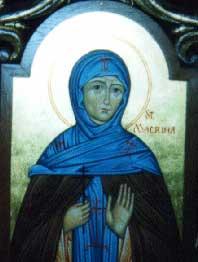
Macrina of Caesarea
Macrina of Caesarea, Monastic and Teacher, 379
Today, the Church remembers Macrina of Caesarea, sometimes called Macrina, the younger.
The Collect:
Merciful God, who called your servant Macrina to reveal in her life and teaching the riches of your grace and truth: Grant that we, following her example, may seek after your wisdom and live according to the way of your Son our Savior Jesus Christ; who lives and reigns with you and the Holy Spirit, one God, for ever and ever. Amen.
Basil the Great is remembered as the founder of Eastern monasticism. All Eastern Orthodox monks are Basilian monks and follow a variation of the monastic rule that he outlined. However, it is often overlooked that the community of monks organized by Basil was preceded and inspired by a community of nuns organized by his sister, Macrina.
Macrina the Elder lived in the days of the Emperor Diocletian, who made a determined effort to destroy the Christian faith. She and her husband fled into hiding, and survived into the time of Constantine. One of their sons, Basil the Elder, and his wife Emmelia, had several distinguished sons, including Basil the Great, Gregory of Nyssa, Peter of Sebastea, Naucratios, and (according to one ambiguously worded communication) Dios of Antioch.
Their oldest offspring, however, was their daughter Macrina (called Macrina the Younger to distinguish her from her grandmother). She was betrothed at the age of twelve, after the custom of the day, but when her fiance died, she determined to devote her life to prayer and contemplation and to works of charity. After the death of her father, she and her mother formed a community of women who shared her goals. She often brought poor and hungry women home to be fed, clothed, nursed, or otherwise taken care of, and many eventually joined the community, as did many women of means.
After the death of their parents, Macrina was chiefly responsible for the upbringing of her ten younger brothers. When they were disposed to be conceited about their intellectual accomplishments, she deflated them with affectionate but pointed jibes. Her example encouraged some of them to pursue the monastic ideal, and to found monastic communities for men. (Dios founded one of the most celebrated monasteries in Constantinople.) Three of them (Basil, Gregory, Peter) became bishops, and all of them were leading contenders for the faith of Nicea against the Arians.
Gregory, in his Life of Macrina, records his last visit with her, and her farewell speech and her prayers and teachings about the resurrection.*
*The Lectionary, James Kiefer, http://www.satucket.com/lectionary/Macrina.htm
Subscribe to:
Posts (Atom)